Last updated: 2025-11-30 14:26:12
MOVEMENT 2: AT THE WATER'S EDGE (The Turning)
Chapter 5: In the Shadow of Your Grace
Listen at: http://go.skylerthomas.com/wqg9eX

"Whoever dwells in the shelter of the Most High
will rest in the shadow of the Almighty."
— Psalm 91:1
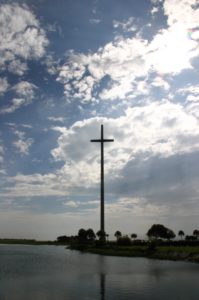
You've walked through several chapters now. You've named the swamp, cried out for help, let something die, and stepped into living water.
But now I need to ask you something important:
Are you ready to continue this journey dwelling in the living water and moving forward with your life?
Not going back to the swamp. Not just standing at the edge analyzing. But actually walking forward, day by day, learning what it means to live washed, sheltered, and held by grace.
This isn't about perfection. It's about direction. It's about choosing, again and again, to stay in the water rather than retreat to what's familiar.
Because in this chapter, you're going to discover something crucial: Grace doesn't just wash you. Grace shelters you for the journey ahead.
Have you ever been disappointed that healing didn't look the way you expected?
You thought getting out of the swamp meant the hard part was over. You thought grace would whisk you away to some peaceful place where everything would finally be easy.
But here you are. You've been washed. You've stepped into the water. You've felt grace begin its work.
And you're discovering that there's still a journey ahead. Still hard terrain. Still scorching days and uncertain paths.
Maybe you're wondering: Is this all there is? Did I leave the swamp just to end up in a desert?
I've been there. And here's what I learned: Grace doesn't always look like escape. Sometimes grace looks like shelter.
Grace as Shelter, Not Escape
We often think of grace as removal from difficult circumstances. Take away the pain. Change the situation. Fix what's broken.
But the shadow of grace works differently.
The shadow doesn't remove the sun—it provides covering under it. Grace doesn't always eliminate the trial—it shelters us through it.
This is the scandal we don't want to hear: sometimes the answer to "Deliver me from this" is "I will be with you in it."
Consider Psalm 91:1-2:
"Those who live in the shelter of the Most High will find rest in the shadow of the Almighty. This I declare about the LORD: He alone is my refuge, my place of safety; he is my God, and I trust him."
— Psalm 91:1-2 (NLT)
Notice the language: shelter, shadow, refuge, fortress. Not words of elimination—words of protection. A fortress doesn't remove the enemy; it protects you from the enemy. A shelter doesn't stop the storm; it covers you during it.
The psalmist is dwelling in the shelter, resting in the shadow. Not after the danger passes. Not once everything's resolved. In the midst of it.
This is where we learn the difference between comfort and presence. We pray for comfort—removal of difficulty. God often gives presence—companionship through difficulty.
The shadow of grace says: "I won't leave you in this alone."
Hiding IN God vs. Hiding FROM God
There are two kinds of hiding. Understanding the difference changes everything.
Hiding FROM is what the first humans did after they failed. Fear-driven. Shame-motivated. Trying to avoid being seen, known, exposed. This hiding isolates us, deepens our wounds, keeps us from the very healing we need.
Hiding IN is what ancient poets described in their prayers. Trust-driven. Safety-seeking. Running toward shelter for covering, not away in fear. This hiding heals, restores, connects us to our true identity.
When I was creating this song, I wrote these notes about the journey:
"What can wash away my shame, or will I live forever in its grip, squeezing the very life out of my soul, leaving me to rot on the heap of humanity? Have I walked too far beyond the boundary of grace, only to look back and see nothing but emptiness?"
This is the voice of me hiding FROM. Convinced I had gone too far. Believing grace has limits.
But then the shift:
"But then I stop. I don't move in any direction. I bow down and listen. And I hear Your voice—just the whisper of Your voice—pleading with me to return, to simply turn around and walk."
From hiding FROM to hiding IN. From running away to turning around. From isolation to invitation.
In the shadow of grace, we don't hide our shame—we bring it into the light of covering. We don't pretend we're okay—we admit we're not and find that the shadow is big enough to cover all of it.
Hiding IN is a practice—a lifelong habit of running toward shelter, not away from it. We learn to live in the shadow now so that we know where home is when the final shadow falls.
Dwelling in the Shelter
Psalm 91 is the bedrock text for understanding shadow grace:
"Those who live in the shelter of the Most High will find rest in the shadow of the Almighty… He will cover you with his feathers. He will shelter you with his wings. His faithful promises are your armor and protection."
— Psalm 91:1, 4 (NLT)
This isn't a one-time transaction. It's a posture. Dwelling. Resting. Living in the shelter, not just visiting it.
Notice the progression:
- Shelter (protective covering)
- Shadow (evidence of presence)
- Covering with feathers (tender, intimate protection)
- Faithfulness as shield (character as our defense)
The protection isn't mechanical—it's relational. Like a mother hen gathering her chicks under her wings, the covering isn't from a distance but with nearness, with tenderness, with the warmth of presence.
Pause and consider: What would it mean to dwell—not just visit, but live—in the shelter of what's Real?
Oswald Chambers writes:
"Never make the blunder of trying to forecast the way God is going to answer your prayer. God's way of answering prayer is infinitely more wonderful than our expectations."
— Oswald Chambers, My Utmost for His Highest
We expect God to remove the danger. He gives us His shadow instead—covering us in ways infinitely more wonderful than we imagined. Not escape, but presence. Not removal, but shelter.
Shadow as Evidence of Light
Here's the theological richness we often miss: shadow is proof of light.
You can't have shadow without a light source. The deeper the shadow, the brighter the light casting it. So when we talk about dwelling in the shadow of grace, we're acknowledging something profound: Reality itself is the light.
"The LORD is my light and my salvation—so why should I be afraid? The LORD is my fortress, protecting me from danger, so why should I tremble?"
— Psalm 27:1 (NLT)
The shadow isn't absence of light—it's the shape light makes when it encounters the substance of divine presence. We rest in that shadow, and in doing so, we're closer to the light than we've ever been.
In the swamp, we couldn't see the light. The muck blocked it out.
At the water's edge, we discover the shadow. We're not yet walking fully in the light, but we're covered by it.
The shadow proves the light is real, present, strong enough to shelter us.
Learning to Rest
The notes I wrote when creating the song speak to this:
"How do I trust after all these years? My shame is great, my faith is weak, and I'm tired. I heard You say, 'Come to Me, and I will give you rest.'"
Rest isn't passivity. It's trust. It's the active decision to stop striving, stop performing, stop trying to earn what's already been given.
Under the covering, we learn to:
- Stop running from the shame and bring it into the shadow
- Stop trying to be strong enough and admit we're weak
- Stop hiding our doubt and confess our questions
- Stop performing faith and simply receive grace
John Ortberg offers this insight:
"Hurry is not just a disordered schedule. Hurry is a disordered heart."
— John Ortberg, The Life You've Always Wanted
Resting in the shadow means unhurrying our hearts. Slowing down enough to notice we're covered. Sheltered. Held.
This is the kind of rest David wrote about:
"Let all that I am wait quietly before God, for my hope is in him. He alone is my rock and my salvation, my fortress where I will not be shaken."
— Psalm 62:5-6 (NLT)
Not in having everything figured out. Not in perfect circumstances. In God alone.
This is soul-rest. The kind that comes not from the absence of struggle but from the presence of God in the struggle.
Images of Shadow
Ruth Under Boaz's Wing
[CONTEXT: The Story of Ruth, Boaz, and Gleaning]
Ruth was a Moabite (a foreigner from a nation that was Israel's enemy) who married into an Israelite family. When her husband died, she chose to stay with her mother-in-law Naomi rather than return to her own people. They were destitute widows with no male protection in an ancient world where women had no legal rights or economic power. "Gleaning" was an ancient welfare system: the law required landowners to leave the edges of their fields unharvested so the poor could gather ("glean") leftover grain to survive. Ruth gleaned in the fields of Boaz, a wealthy landowner who turned out to be a distant relative. In that culture, a "kinsman-redeemer" was a male relative who could marry a widow to preserve the family line and property. Boaz became Ruth's kinsman-redeemer, marrying her and restoring her security. Their great-grandson was King David, making Ruth an ancestor of Jesus. Her story is about a vulnerable foreign woman finding shelter, protection, and redemption through grace.
Ruth was a Moabite widow in a foreign land—no husband, no security, no legal protection. She gleaned in the harvest fields, working from sunrise, gathering scraps to keep herself and Naomi from starving. She was vulnerable. Exposed. A foreign woman alone.
Then Boaz, the field owner, noticed her and spoke this blessing:
"May the LORD, the God of Israel, under whose wings you have come to take refuge, reward you fully for what you have done."
— Ruth 2:12 (NLT)
Ruth had left everything to come under the wing-shadow of Yahweh. She sought shelter in the God of Israel even though she had no guarantee He would provide.
And what happens? God provides through Boaz. Protects her. Covers her. Redeems her story completely—she becomes part of the lineage of King David and Jesus Himself.
Shadow grace doesn't promise comfort or ease. But it promises covering. And under that covering, redemption happens.
The Cloud in the Wilderness
When God led Israel out of Egypt into the wilderness, He didn't remove the wilderness. The desert was still scorching hot by day, bitter cold at night.
But God didn't leave them exposed:
"By day the LORD went ahead of them in a pillar of cloud to guide them on their way and by night in a pillar of fire to give them light."
— Exodus 13:21
The cloud wasn't just navigation—it was mercy. Protection. Visible, tangible proof that God was present, leading, sheltering. In the scorching wilderness, that shadow meant the difference between survival and death.
God didn't teleport them to the promised land. He walked them through the wilderness, step by step. But He never left them exposed. The shadow of His presence covered them every single day.
Jesus' Longing
Perhaps the most heartbreaking image comes from Jesus Himself:
"Jerusalem, Jerusalem… how often I have longed to gather you together, as a hen gathers her chicks under her wings, and you were not willing."
— Matthew 23:37
When danger comes, the mother hen doesn't run. She spreads her wings and calls her chicks to safety beneath her. She covers them with her own body, willing to take the blow herself.
This is the heart of God. Longing to gather us. Aching to cover us. Willing to take the wounds so we can be sheltered.
The shadow is there. The wings are spread. Will we come?
The Wayfarer Moment
Grace doesn't promise no suffering. Grace promises no suffering alone.
This is the wayfarer truth we discover in the shadow: Reality doesn't always remove the pain, but it never leaves us in it alone.
The sun still beats down. The wilderness is still real. The journey is still hard.
But we're covered. Sheltered. Never abandoned.
In the swamp, we felt alone. Isolated. Forgotten.
At the water's edge, we discover the shadow. And in that shadow, we find we were never alone at all. Love has been with us all along, waiting for us to stop running and start resting.
The shadow isn't the absence of light—it's the shape love makes when it stands between us and harm.
Song Integration
Standing in full sunlight at the height of my spiritual crisis, I wasn't basking in illumination—I was burning from exposure. Every wound visible. Every failure on display. This is the paradox the comfortable never understand: sometimes the problem isn't darkness. Sometimes the problem is too much light—too much exposure, too much harsh truth without any corresponding shelter.
"In the Shadow of Your Grace" emerged from that scorched place. From discovering what I needed wasn't escape from reality but shelter within it.
Western Christianity tends to emphasize victory, breakthrough, deliverance—mountains moved, trials removed, circumstances changed. But more often in the actual lived experience of faithful people, God doesn't remove the trial. He provides presence within it. Not escape, but shelter. Not deliverance from, but companionship through.
Psalm 91 establishes this theology: "Whoever dwells in the shelter of the Most High will rest in the shadow of the Almighty." Dwelling—not visiting, not dropping by in crisis, but making your home. The psalm doesn't promise the absence of "the terror of night" or "the arrow that flies by day." These threats are real and present. The promise is covering, not elimination.
This is the scandal modern Christianity often tries to soften: following Jesus doesn't guarantee exemption from suffering. It guarantees we won't suffer alone.
The song tracks a transformation: from fear-based hiding to faith-based hiding. From running away to running toward. "I've been running, I've been hiding, worn out from the fight." This is Genesis 3 hiding—afraid of being seen. When shame drives hiding, we hide from exposure because we believe being fully known means being fully rejected.
But the song pivots: "But You call my name, You take the weight, You step right into my mistake." God doesn't wait at a safe distance for us to clean up. He steps into the mistake. Into the mess. "You tear the veil, You light the way"—referencing the temple veil torn at Christ's crucifixion (Matthew 27:51).
[CONTEXT: The Temple Veil]
In the ancient Jewish temple, there was a massive curtain (the veil) that separated the Holy of Holies—the innermost room representing God's presence—from the rest of the temple. Only the high priest could enter the Holy of Holies, and only once a year on the Day of Atonement, to offer sacrifices for the people's sins. The veil symbolized the separation between a holy God and sinful humanity. When Jesus died on the cross, the Gospel accounts record that this massive temple veil was torn in two from top to bottom—symbolizing that the barrier between God and humanity was removed. Direct access to God became available to everyone, not just the high priest. "Tearing the veil" means removing the barrier, opening the way for intimate access to God's presence.
The chorus declares: "Oh, in the shadow of Your grace, every fear begins to fade." Not "instantly disappears" but "begins to fade." Shadow grace is a process. "Where mercy meets me face to face, I am free, I'm not the same!" This is the paradox: in the shadow, somehow we're face to face. The shadow isn't distance from the light source—it's proximity to it. You can only be in someone's shadow if you're close enough to be covered by them.
The shadow of grace teaches crucial truths: Proximity matters more than circumstances. Shelter is a form of deliverance—not from the circumstance but from facing it alone. And the shadow is evidence of light, not absence of it. In that shadow, transformation happens. Not because you're striving but because you're dwelling.
Lyrics: In the Shadow of Your Grace
[Verse 1]
I’ve been running, I’ve been hiding,
Worn out from the fight.
Tangled up in chains I fastened,
Lost inside the night.
[Pre-Chorus]
But You call my name, You take the weight,
You step right into my mistake.
You tear the veil, You light the way,
I won’t go back, I won’t be the same!
[Chorus]
Oh, in the shadow of Your grace,
Every fear begins to fade.
Where mercy meets me face to face,
I am free, I’m not the same!
[Verse 2]
I’ve been restless, wide-eyed, sleepless,
Haunted by my past.
But Your blood is still my ransom,
And Your love is built to last.
[Pre-Chorus]
You call my name, You take the weight,
You step right into my mistake.
You tear the veil, You light the way,
I won’t go back, I won’t be the same!
[Chorus]
Oh, in the shadow of Your grace,
Every fear begins to fade.
Where mercy meets me face to face,
I am free, I’m not the same!
[Bridge]
No more hiding, no more grave,
Hell is shaking, heaven stays!
Chains are falling, fear erased,
I am free in Jesus’ name!
[Tag]
I won’t bow down, I won’t break,
Darkness runs when I say His name!
I won’t bow down, I won’t break,
I’m alive in Jesus’ name!
[Final Chorus]
Oh, in the shadow of Your grace,
Every fear begins to fade.
Where mercy meets me face to face,
I am free, I’m not the same!
I’ve been running, I’ve been hiding,
Worn out from the fight.
Tangled up in chains I fastened,
Lost inside the night.
Key Takeaways
- Grace shelters, not just rescues. God doesn't always remove the trial, but He covers you through it. The shadow doesn't eliminate the sun—it provides protection under it.
- Hide IN God, not FROM God. Running toward shelter is faith; running from exposure is fear. Bring your shame into the shadow of grace where it's covered, not hidden.
- Shadow is proof of light. You can't have shadow without a light source. Resting in God's shadow means you're closer to His presence than you've ever been.
- Dwelling is different from visiting. Psalm 91 invites you to live in the shelter, not just stop by in crisis. Make presence your primary residence, not your emergency contact.
Reflections for the Road
Questions for the Journey:
- Where are you seeking escape when God might be offering shelter?
What trial are you begging to have removed? What if, instead of removing it, you're being invited to experience presence in it? How might that shift your prayer?
- Are you hiding FROM or IN?
Be honest: What are you afraid will be seen if you come close? What shame are you carrying that keeps you at a distance?
Remember: The shadow of grace is for the ashamed. The broken. The weary. Come as you are.
- What does dwelling (not just visiting) in shelter look like for you?
Psalm 91 talks about dwelling—making your home—in shelter. Not dropping by when you need something. Living there.
What would change if you made presence your primary residence instead of your emergency contact?
- Read Psalm 91 slowly. Which verse speaks most to where you are right now?
Don't rush through it. Let each image sink in. Shelter. Shadow. Refuge. Fortress. Wings. Covering.
Which one makes you want to weep? Which one makes you want to rest? That's probably the one you need to sit with today.
Closing Image
You're still at the water's edge. The journey isn't over. There's more road ahead, more wilderness to cross, more unknowns to face.
But something has changed.
You're no longer running from the sun. You're resting in the shadow.
The heat is still real. The sun still beats down. The journey is still hard.
But over you, sheltering you, covering you, is the shadow of the Almighty.
Take a breath.
You look up and see the source of the shadow: Love itself, standing between you and the scorching trial. Not removing it, but covering you through it.
And you realize: this is enough. Not what you wanted, perhaps. But enough.
The shadow proves the light is real.
And where there's light, there's the One who is Light.
So you breathe. You rest. You trust.
And you take the next step, knowing you're not walking alone. The shadow moves with you. The covering remains. The presence never leaves.
You're learning to live in the shadow of grace.
And in that shadow, you're finding something you didn't expect: not escape from the wilderness, but peace within it.
Not the absence of trial, but the presence of Love in trial.
Not the end of the journey, but the strength to keep walking.
One step at a time.
Under His wings.
In the shadow of grace.